Desert Safari Bike Names: Types of Bikes Used in Desert Safaris
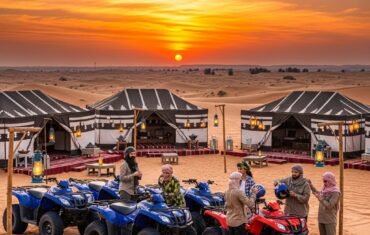
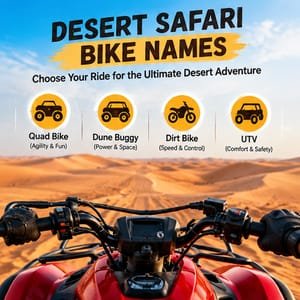
A quad bike, also known as an All-Terrain Vehicle or ATV, is commonly associated with desert safari experiences, while high-performance dirt bikes and adventure motorcycles are generally used for professional or advanced cross-desert riding.
If you’re researching a desert safari bike name before choosing a desert safari experience, you’re probably trying to understand exactly what kind of bike is involved. Different bikes have different characteristics in terms of speed, control, stability, and comfort on sand. Knowing the common categories and models used by professional operators can help you better understand the types of vehicles available. Here’s a complete breakdown of the most common bikes and models used across desert safari tours and what makes each category suited to desert terrain.
Understanding Bikes Used in Desert Safaris
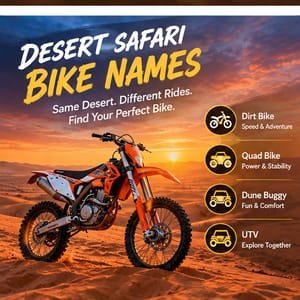
Not all bikes are built to handle sand. Desert terrain requires specific engineering, including wider tires for flotation, adjusted suspension for dune impact, and enough power to perform in soft sand.
That’s why professional desert safari operators use specific categories and models rather than standard road or trail bikes.
Main Categories of Desert Safari Bikes
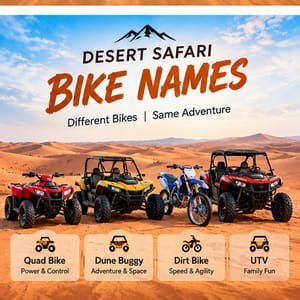
Dirt Bikes
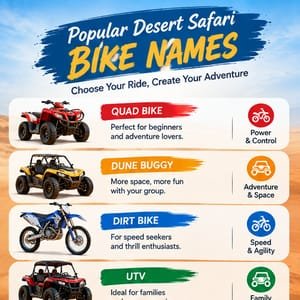
Lightweight, high-clearance motorcycles built for off-road terrain, dirt bikes are popular for their agility on steep dunes and quick handling.
Quad Bikes (ATVs)
Four-wheeled all-terrain vehicles offer greater stability than two-wheeled bikes, making them a common category used in desert environments.
Side-by-Side Buggies (UTVs)
Enclosed or roll-cage vehicles that seat two or more riders side by side, UTVs offer a hybrid experience between a bike and a 4×4.
Fat Tire Bicycles
Non-motorized bikes with oversized tires are designed to distribute weight and reduce sinking in sand. They can provide a quieter desert experience for cycling enthusiasts.
Popular Dirt Bike Models Used in Desert Environments
Yamaha WR450F — Known for its lightweight frame and strong torque, this model is associated with intermediate and advanced desert riding for its balance of power and control.
Honda CRF450X — A durable, reliable off-road motorcycle widely used in desert and enduro riding, with smooth power delivery over uneven terrain.
KTM 450 EXC — A high-performance dirt bike popular with experienced riders seeking speed and agility across dune terrain.
Husqvarna FE 450 — Valued for its responsive handling and comfort over longer rides, making it a recognized option for extended desert bike tours.
Popular Quad Bike (ATV) Models
Yamaha Raptor 700 — One of the widely recognized sport quads in desert tourism, known for its speed, stability, and handling characteristics.
Polaris Sportsman 570 — A versatile ATV offering control and comfort, commonly associated with guided tours and private desert excursions.
Can-Am Renegade — Known for durability and power, this model is associated with operators offering more advanced or extended dune routes.
Honda TRX420 — A dependable, well-balanced ATV frequently associated with guided tours because of its manageable power and stability.
Popular Side-by-Side (UTV) Models Used in Desert Safaris
Polaris RZR — One of the recognized names in desert buggy tourism, offering high-performance capability with roll-cage protection and seating for two or more.
Can-Am Maverick — A powerful UTV model popular for guided dune buggy tours, offering a combination of speed and stability across varied terrain.
Yamaha YXZ1000R — Known for its sporty handling and manual transmission option, this model is associated with a more engaging driving experience.
How Operators Choose Which Bike Models to Use
Reputable desert safari operators select bike models based on several key factors:
- Terrain suitability — models proven to handle soft sand and steep dunes without excessive sinking or stalling.
- Rider skill range — a mix of different vehicle categories may be available for different experience levels.
- Maintenance reliability — models known for durability under frequent desert use.
- Safety features — roll cages, seatbelts, and stability control where applicable, especially for UTVs.
- Availability of parts and servicing — practical considerations that affect fleet reliability over time.
Bike Types and Different Experience Levels
Complete Beginners
Quad bikes (ATVs) such as the Honda TRX420 or similar models are commonly associated with first-time desert riding because of their four-wheel configuration and stability.
Riders With Some Off-Road Experience
Intermediate dirt bikes such as the Yamaha WR450F are designed for riders familiar with two-wheeled off-road vehicles and offer a balance of control and performance.
Groups Wanting a Shared Experience
Side-by-side UTVs such as the Polaris RZR allow two or more people to share one vehicle, making them a common option for groups.
Experienced, Advanced Riders
High-performance dirt bikes such as the KTM 450 EXC or powerful UTVs such as the Can-Am Maverick are associated with faster and more technical desert riding.
What to Know About These Bikes in Desert Terrain
Handling Differences
Sand riding differs from riding on paved roads or other surfaces. A bike that feels light and responsive on pavement may behave differently on shifting dunes. This is why professional operators should provide appropriate guidance and supervision.
Power and Control
Professional-grade desert bikes may be configured for sand conditions, with characteristics designed to provide suitable throttle response and performance in softer terrain.
Comfort Over Extended Rides
Suspension quality varies by model. Bikes designed for desert touring, such as the Husqvarna FE 450, may provide different comfort characteristics over longer routes compared with sport-focused models built primarily around performance.
Safety and Equipment Considerations
Professional desert safari operations should prioritize appropriate protective equipment, reliable vehicle mechanics, and suitable guided operational support.
Important considerations can include:
- Roll cages on UTVs and buggies for added protection.
- Seatbelts and harness systems, especially in side-by-side vehicles.
- Wide, sand-specific tires for suitable traction and reduced sinking.
- Regular maintenance schedules to support reliable performance.
- Properly calibrated suspension for desert terrain and dune impact absorption.
Why Fleet Selection Matters
We don’t use random or outdated equipment. Vehicle selection, maintenance, and appropriate safety equipment are important considerations when operating desert safari vehicles in challenging terrain.
A well-maintained fleet can help operators provide a more consistent experience while supporting appropriate safety standards and vehicle reliability.
Understanding the Desert Safari Bike Name
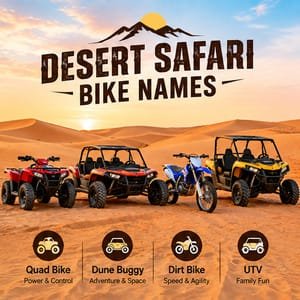
When searching for a desert safari bike name, it is important to understand that there is no single type of bike used across every desert safari. The term can refer to different categories, including dirt bikes, quad bikes, ATVs, UTVs, and other vehicles designed or adapted for desert terrain.
The exact model available can vary by operator, location, package, vehicle fleet, and current availability. Travelers should confirm the specific vehicle type and current details directly with the operator before making a booking