Desert Safari Dubai
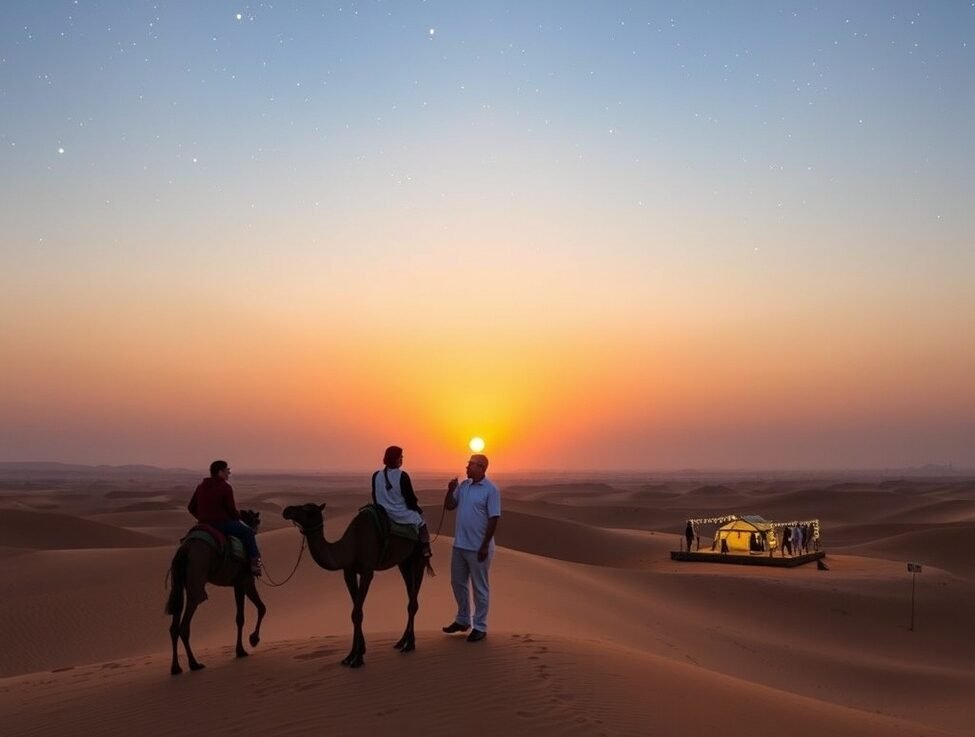
Dubai’s skyline may dazzle with glass and steel, but the city’s true poetry lives in the dunes. Nowhere is that more evident than on a Dubai Desert Safari in Al Awir, where the urban rush gives way to an expanse of rippling sand, wind-carved ridges, and a silence that feels almost sacred. Al Awir sits on the eastern edge of the emirate, close enough for an easy escape yet far enough to let the desert breathe. The landscape changes by the hour—amber in the late afternoon, rose-gold at sunset, and silver beneath the stars. Dubai Desert Safari packages offer travelers a chance to experience this dynamic environment while leaving the city’s bustle behind.
Experience and Activities in Dubai Desert Safari
The journey begins the moment you leave the city’s arterial roads and the skyline fades into the rearview mirror. The asphalt gives way to sand tracks, the tires soften their hum, and an ocean of dunes takes shape ahead. Most safaris start with dune bashing, a spirited ride in a 4×4 driven by a trained desert driver who reads sand the way a sailor reads waves. The vehicle climbs a ridge, hovers almost weightless for a second at the crest, then slides down with a controlled swoop. Safety is treated seriously: seatbelts are non-negotiable, and reputable operators adjust routes to the day’s conditions. For those who prefer a gentler afternoon, campers can skip the bashing and meet the group at camp.
Once the wheels pause, the desert invites play. Sandboarding turns a dune into a slope, while quad biking, available in designated zones, gives adrenaline a throttle. Camel rides lend a rhythmic, swaying perspective, evoking the caravans that once threaded these routes. Falconry demonstrations sometimes unfold at twilight, the falcon’s silhouette a dark cutout against a fading sky, highlighting the deep bond between desert cultures and birds of prey.
As the sun lowers, the desert becomes a theater. Al Awir’s dunes catch the light like facets, ridges rimmed in fire, troughs cooling to purple. Evening safaris lead to Bedouin-inspired camps, glowing warmly with lantern light. Guests enjoy cardamom-laced Arabic coffee, dates, and the swirl of spices from nearby grills. Henna artists trace filigree across hands, while the scent of oud and shisha drifts through the night air. Dinner is typically a buffet bridging tradition and familiarity, accommodating both vegetarians and adventurous eaters. Performances vary by operator and season; you might see a tanoura dancer, hear the frame drum’s heartbeat under the stars, or watch a fire artist sketch heat into the sky.
 Types of Dubai Desert Safari
Not every safari follows the same clock. Sunrise trips trade camp festivities for quietude and color—the dunes cool underfoot, the air almost sweet, perfect for those who prefer mood over spectacle. Evening safaris, the most popular, offer the full arc: dune bashing, camel rides, sunset, and cultural immersion. Private tours linger where you want, while shared tours add camaraderie and laughter from strangers-turned-tablemates. Luxury options, team events, and photography-focused tours provide specialized experiences. Al Awir’s location is part of its charm: closer than deeper desert reserves, its dunes are photogenic, supportive of a wide network of operators ranging from budget-friendly to boutique. Choosing the right operator matters—licensed guides, modern safety equipment, clear inclusions, and small group sizes ensure a quality experience.
Positive and Negative Aspects of Dubai Desert Safari
Positive aspects of a Dubai Desert Safari include adventure, cultural exposure, and unique scenery. Activities like dune bashing, sandboarding, camel trekking, and falconry provide thrill and excitement. Cultural immersion, authentic meals, henna art, and traditional performances create memorable experiences. Photography enthusiasts benefit from golden-hour light across dunes, while families can enjoy accessible safari options.
Negative aspects include environmental and physical challenges. Harsh heat, cold nights, and sand can be physically demanding. Overcrowding, irresponsible driving, and disruption of sensitive habitats are potential risks. Summer safaris require careful planning, hydration, and protective clothing. Travelers prone to motion sickness, pregnant women, or individuals with back or heart conditions should avoid dune bashing. Ethical concerns around animal treatment, particularly camels and falcons, also need attention. Selecting reputable operators and following safety guidelines mitigates these negatives while ensuring a positive experience.
The main idea of Dubai Desert Safari is to provide an immersive adventure that blends adrenaline, cultural heritage, and natural beauty. It is an encounter with the desert as a living landscape—patient, luminous, and always in motion. Activities like camel trekking, dune bashing, and sandboarding offer fun and excitement, while camps and performances introduce travelers to local traditions. Observing the desert at sunrise or sunset, and under starlit skies, fosters appreciation of scale, light, and time. A safari is not just a checklist of activities but a recalibration of perspective—understanding the desert’s role in shaping the land, culture, and history of the region.
Conclusion on Dubai Desert Safari Experience 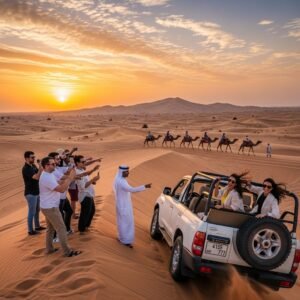
A Dubai Desert Safari in Al Awir is many things—adventure, hospitality, scenery—but above all, it is an encounter with the element that shaped the region. Travelers leave with a sense of awe, having experienced a vast, ever-changing landscape, cultural richness, and the thrill of desert activities. From dune bashing and sandboarding to camel rides, falconry, and traditional camp entertainment, the safari balances action and immersion. Ethical tourism, safety measures, and seasonal timing enhance the experience. Returning to the city after a desert safari makes Dubai’s urban sheen feel framed against the patience and poetry of the desert. It is an experience that connects visitors to nature, culture, and history, leaving lasting memories and a deeper appreciation for the land and its people.